
Every dog owner knows the sound. That suspicious gagging noise from the next room, followed by several seconds of frantic searching for the nearest paper towel. Dogs occasionally vomit for fairly ordinary reasons – eating too quickly, stealing something from the kitchen counter, munching grass, or simply making a questionable dietary decision.
However, vomiting is not always a harmless stomach upset. Sometimes it is the first warning sign of a condition that requires immediate veterinary attention. The challenge for pet owners is knowing when monitoring at home may be reasonable and when waiting could put their dog at risk.
Understanding the difference can help you make faster, safer decisions when your four-legged family member suddenly becomes sick.
Is It Normal for a Dog to Vomit Occasionally?
A single episode of vomiting does not automatically mean your dog is experiencing a medical emergency. Healthy dogs sometimes vomit and then immediately return to their normal routine – including asking for food as though nothing happened.
If your dog vomits once but remains energetic, interested in water, comfortable, and otherwise behaves normally, careful observation may be appropriate.
The situation becomes more concerning when vomiting repeats, continues for several hours, or appears together with other symptoms.
Veterinarians look at the entire picture rather than vomiting alone. Your dog’s age, medical history, behaviour, appetite, hydration, possible exposure to toxins, and the appearance of the vomit can all provide important clues.
In other words, the number of times your dog vomits matters – but what happens before, during, and after those episodes matters just as much.
When Is Vomiting an Emergency in Dogs?
Repeated vomiting can cause dehydration and electrolyte imbalances surprisingly quickly, particularly in puppies, senior dogs, and dogs with existing medical conditions.
You should consider vomiting potentially urgent when your dog shows one or more of the following warning signs:
- Vomiting repeatedly within a short period
- Trying to vomit but producing little or nothing
- Blood in the vomit or material that resembles coffee grounds
- A swollen, firm, or painful abdomen
- Severe weakness, collapse, trembling, or difficulty standing
- Vomiting together with significant diarrhea
- Refusing water or vomiting immediately after drinking
- Pale, white, blue, or unusually dark gums
- Difficulty breathing
- Suspected ingestion of medication, chemicals, toxic foods, plants, or foreign objects
- Significant abdominal pain, whining, pacing, or inability to get comfortable
- Vomiting in a very young puppy, elderly dog, or dog with a serious medical condition
If several of these symptoms appear together, contacting an emergency vet in Calgary promptly is safer than waiting to see whether the problem improves overnight.
Dogs are remarkably good at getting themselves into situations they were never invited to investigate. Unfortunately, their stomachs are not always equally talented at getting them back out.
Repeated Vomiting Is More Concerning Than One Episode
One isolated episode may simply mean your dog ate something irritating. Vomiting five or six times over several hours tells a very different story.
Repeated vomiting can quickly prevent a dog from keeping down water. Once that happens, dehydration becomes increasingly likely. Continued fluid loss may also affect electrolyte balance, circulation, and overall organ function.
Small dogs and puppies can deteriorate particularly quickly because they have much smaller fluid reserves.
If your dog continues vomiting despite having an empty stomach, veterinary assessment becomes increasingly important. Yellow bile, foam, or clear fluid may still indicate ongoing nausea or gastrointestinal irritation even when there is no food left to bring up.
Do not assume that an empty stomach means the problem has finished.
Watch for a Swollen Abdomen and Unproductive Retching
One especially important emergency involves dogs repeatedly attempting to vomit without actually producing much material.
When this happens together with abdominal swelling, restlessness, excessive drooling, pacing, or obvious discomfort, immediate veterinary attention is necessary.
These symptoms can be associated with gastric dilatation-volvulus, commonly known as GDV or bloat. The stomach fills with gas and may rotate, interfering with blood circulation and creating a rapidly life-threatening condition.
Large, deep-chested breeds are particularly susceptible, although serious abdominal emergencies are not limited to specific breeds.
This is not a situation where you want to give your dog a few hours to “sleep it off.” Rapid veterinary treatment can make an enormous difference.
What Does Blood in Dog Vomit Mean?
Blood in vomit always deserves attention.
Bright red blood may indicate active bleeding somewhere in the mouth, throat, esophagus, or stomach. Dark brown material resembling coffee grounds may represent partially digested blood.
Possible causes range from gastrointestinal inflammation to ulcers, foreign objects, toxin exposure, clotting disorders, and other internal problems.
The amount of blood matters, but even small amounts should not automatically be dismissed – particularly when accompanied by weakness, abdominal pain, diarrhea, pale gums, or repeated vomiting.
Take a photo of the vomit before cleaning it up if possible. It may not be the most glamorous addition to your phone’s photo gallery, but it can provide useful information to your veterinarian.
Could Your Dog Have Swallowed Something?
Foreign-object ingestion is a common reason dogs develop serious vomiting.
Socks, pieces of toys, bones, corn cobs, underwear, children’s toys, strings, and assorted objects that no reasonable creature would consider food somehow remain extremely attractive to dogs.
If an object becomes trapped in the stomach or intestine, it can create a partial or complete obstruction.
Signs of a possible obstruction can include:
- Repeated vomiting or retching
- Loss of appetite
- Abdominal tenderness or swelling
- Reduced bowel movements or inability to pass stool
- Lethargy and unusual weakness
- Whining, stretching, or repeatedly changing position
- Vomiting shortly after eating or drinking
- Behaviour suggesting significant discomfort
An obstruction may require diagnostic imaging and, in some cases, surgical treatment. Waiting for an object to “pass naturally” without veterinary guidance can be dangerous because intestinal tissue may become damaged if blood supply is compromised.
Vomiting After Possible Poisoning Requires Fast Action
Vomiting may also occur after exposure to something toxic.
Dogs can encounter potentially dangerous substances in kitchens, garages, gardens, purses, backpacks, and even dropped food during walks.
Chocolate, certain artificial sweeteners, human medications, antifreeze, rodenticides, some plants, cleaning chemicals, and other substances can cause serious illness.
If you know or strongly suspect that your dog swallowed something harmful, do not wait for additional symptoms before contacting a veterinarian.
Bring the packaging, ingredient list, medication bottle, or a photo of the substance whenever possible. Knowing exactly what the dog consumed, approximately how much, and when exposure occurred can help the veterinary team determine the safest treatment.
Also avoid attempting to make your dog vomit unless specifically instructed by a veterinary professional. With certain substances or objects, inducing vomiting can create additional injuries.
What If My Dog Is Vomiting but Still Seems Happy?
This is where things become tricky.
Dogs do not always read the veterinary textbook before developing an illness.
Some dogs continue wagging their tails, following family members around, and showing interest in food even when something significant is developing internally.
Normal behaviour is encouraging, but it should not override other warning signs. A cheerful dog that has vomited repeatedly, cannot keep water down, or may have swallowed a foreign object still deserves veterinary evaluation.
Pay attention to changes over time. A dog that seems relatively normal at noon may become noticeably lethargic several hours later.
When uncertain, speaking with a veterinary clinic in Calgary can help determine whether your dog’s symptoms require urgent examination or careful monitoring.
What Will a Veterinarian Check?
Veterinary assessment usually begins with questions about when vomiting started, how frequently it occurs, what the vomit looks like, what your dog recently ate, whether bowel movements are normal, and whether exposure to toxins or foreign objects is possible.
The veterinarian may then examine hydration, gum colour, temperature, heart rate, abdominal tenderness, and overall condition.
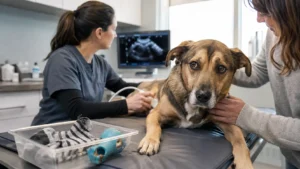
Depending on the findings, diagnostic testing may include bloodwork, X-rays, ultrasound, or other examinations. Treatment can involve anti-nausea medication, intravenous or subcutaneous fluids, gastrointestinal support, pain management, hospitalization, or treatment targeted toward the underlying cause.
The goal is not simply to stop vomiting. The real priority is identifying why it is happening.
Why Home Remedies Can Sometimes Make Things Worse
The internet contains an impressive collection of home remedies for vomiting dogs. Unfortunately, “someone on a forum said it worked for their Labrador” is not quite the same thing as a diagnosis.
Human medications can be dangerous for dogs, incorrect doses can cause toxicity, and delaying treatment while experimenting with remedies may allow a serious condition to progress.
Even withholding food is not appropriate in every situation. Puppies, diabetic dogs, dogs with certain illnesses, and animals experiencing prolonged vomiting may require a different approach.
Professional veterinary guidance allows treatment to be based on your dog’s actual condition rather than guesswork.
When in Doubt, Take Vomiting Seriously
Most dog owners will encounter occasional vomiting at some point, and many episodes turn out to be minor. The key is recognizing when the situation no longer looks minor.
A single episode in an otherwise energetic, comfortable dog may only require monitoring. Repeated vomiting, blood, abdominal swelling, weakness, suspected poisoning, inability to keep water down, or unsuccessful attempts to vomit should raise concern quickly.
Your dog cannot explain whether the problem is mild nausea or severe abdominal pain. Behaviour and physical symptoms are the clues you have – and veterinary assessment can provide the answers you need.
West Mount Vet provides professional veterinary care focused on identifying the cause of your dog’s symptoms and determining the most appropriate next steps. Early assessment can help relieve discomfort, detect serious conditions sooner, and reduce the risk of complications.
Contact West Mount Vet if Your Dog Is Vomiting
If your dog is vomiting repeatedly, acting unusually, showing signs of pain, or you simply feel that something is not right, contact West Mount Vet today. Our veterinary team can evaluate your dog’s condition, identify potential causes, and recommend appropriate treatment.
When your dog is sick, guessing should never be the treatment plan. Call West Mount Vet and let an experienced veterinary team help your pet feel better – and help you stop wondering whether that mysterious stomach noise is something serious.