
If your dog keeps shaking their head, scratching their ears, or has an unusual ear smell, an ear infection could be the cause. Other signs include redness, discharge, swelling, and sensitivity around the ears.
These symptoms can also occur with allergies, parasites, or something caught in the ear canal. A veterinary examination helps identify the problem and the right treatment.
How Quickly Should Your Dog See a Vet?
Contact your veterinarian promptly if you notice persistent scratching, head shaking, discharge, redness, or an unusual ear odour. Describe your dog’s symptoms so the team can advise how soon they should be seen.
You don’t need to wait until your dog seems seriously unwell. Ear problems can be painful even when your dog is still eating, playing, and wagging their tail.
Noticing changes in your dog’s ears? Call Westmount Animal Clinic at 403-283-3354 during clinic hours to discuss their symptoms, or request an appointment. For urgent concerns, call rather than wait for an online response.
When Do Ear Symptoms Need Urgent Care?
Seek urgent veterinary attention if your dog develops:
- Sudden loss of balance, stumbling, or difficulty standing.
- A new head tilt, especially with coordination problems.
- Rapid, involuntary eye movements.
- Facial drooping or difficulty blinking.
- Severe pain, significant swelling, or bleeding.
- A sudden change in hearing.
These signs do not automatically mean an ear infection. Inner ear disease and other conditions can cause similar symptoms, so prompt assessment matters.
Learn about urgent veterinary care at Westmount Animal Clinic. If your dog cannot stand, is rapidly worsening, or appears severely distressed and we are closed or cannot be reached promptly, seek care at an open emergency veterinary hospital.
7 Signs Your Dog May Have an Ear Infection
1. Repeated Head Shaking
An occasional head shake is normal. Frequent shaking throughout the day may mean your dog is trying to relieve irritation or discomfort.
Pay attention if it starts suddenly, continues, or happens alongside scratching or discharge.
2. Persistent Ear Scratching
Your dog may scratch one or both ears or rub their head against the carpet, furniture, or your legs.
Repeated scratching can injure the skin and make an already irritated ear more uncomfortable.
3. An Unusual Ear Smell
A strong, musty, sour, or unpleasant smell can signal an ear problem. If your dog’s ears smell noticeably different from usual, arrange an assessment rather than trying to cover up the odour.
4. Redness or Swelling
The ear flap or entrance to the ear canal may look red, swollen, or irritated. Significant inflammation can make the ear canal narrower and more painful.
Avoid forcing the ear open or handling it repeatedly if your dog seems uncomfortable.
5. Unusual Discharge
Excessive wax or yellow, brown, black, or pus-like discharge deserves attention, especially with odour or itching.
Discharge colour alone cannot tell you what is causing the problem. Different conditions can look similar and need different treatments.
6. Pain Around the Ears
Your dog may pull away, whine, or become defensive when you touch their head or ears. A dog who normally enjoys being petted may suddenly avoid it.
Respect that reaction. Painful ears should be examined gently rather than repeatedly checked at home.
7. Changes in Behaviour or Hearing
Some dogs become quieter, restless, irritable, or less interested in their usual activities. You might also notice a change in how they respond to familiar sounds.
These changes can have several causes, including ear disease, and should be discussed with your veterinarian.
Why Do Dogs Get Ear Infections?
A dog’s ear canal can trap moisture and debris. Inflammation can then create conditions that allow bacteria or yeast to multiply.
Factors that contribute to ear problems include:
- Allergies: Environmental or food allergies can cause ear inflammation.
- Moisture: Swimming and bathing can leave ears damp.
- Ear anatomy: Narrow canals or floppy ears may make some dogs more susceptible.
- Parasites or foreign material: Ear mites or grass seeds can cause irritation.
- Ongoing inflammation: Changes in the ear canal can make recurring problems harder to resolve.
The cause matters because treating an infection alone may not address what started it.
Can You Treat a Dog’s Ear Infection at Home?
Avoid putting home remedies, leftover medication, or unapproved cleaners into a painful ear.
Vinegar, peroxide, oils, and other household products may irritate inflamed tissue. Some ear products can also be harmful if the eardrum is damaged.
Do not insert cotton swabs into the ear canal. They can push material deeper or cause injury.
Until your dog is examined, avoid deep cleaning and keep water out of the affected ear. Your veterinarian can explain which products, if any, are appropriate.
How Are Dog Ear Infections Diagnosed and Treated?
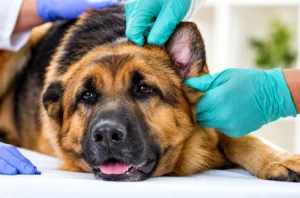
Your veterinarian may examine the ear canal with an otoscope and check a sample of discharge under a microscope. This helps identify organisms such as bacteria or yeast and guides treatment.
Depending on the findings, care may include:
- Appropriate ear cleaning.
- Prescription ear medication.
- Treatment to reduce pain and inflammation.
- Management of an underlying condition.
Very painful ears may require sedation for a thorough examination. Persistent or complicated cases may need further testing.
Follow the prescribed treatment plan and attend recommended rechecks, even if the ear looks better. Visible improvement does not always mean the problem has fully resolved.
Why Does My Dog Keep Getting Ear Infections?
Recurring infections often mean an underlying issue needs attention. Allergies, chronic inflammation, changes in the ear canal, or an incompletely resolved infection may contribute.
Tell your veterinarian how often the problem returns, which treatments your dog has received, and whether you also notice itchy paws or irritated skin.
Westmount’s wellness care services include skin and allergy care, which may be relevant when ear problems keep returning.
Can You Help Prevent Ear Problems?
Some ear problems cannot be prevented, but a suitable care routine can help:
- Notice how your dog’s ears normally look and smell.
- Gently dry the outer ears after swimming or bathing.
- Use ear cleaners only as recommended by your veterinarian.
- Avoid overcleaning or inserting objects into the ear canal.
- Discuss recurring itching or inflammation during veterinary visits.
If your dog is prone to infections, ask for a cleaning routine suited to their ears rather than choosing products through trial and error.
Help Your Dog Feel Comfortable Again
Persistent scratching, head shaking, and smelly ears are reasons to call. You don’t need to know the cause before asking for help.
At Westmount Animal Clinic in Kensington, Calgary, we can assess your dog’s symptoms and recommend the next steps.
Call 403-283-3354 during clinic hours to discuss your dog’s ear problem. For non-urgent concerns, request an appointment here.
If your dog has severe pain, balance problems, or rapidly worsening symptoms, call promptly to discuss urgent care availability.