
Cats are excellent at making their needs known when dinner is three minutes late. When something hurts, however, they can become surprisingly secretive. Dental disease is a perfect example: your cat may have a painful tooth while continuing to patrol the windowsill, claim your favourite chair, and demand breakfast.
That is why recognising the signs of dental disease in cats matters. Small changes in breath, eating habits, or behaviour can reveal a problem that deserves professional attention. Knowing what to watch for helps you protect your cat’s comfort before a hidden issue becomes a much bigger concern.
Why Dental Disease Can Go Unnoticed
Cats often hide pain, and dental discomfort does not always produce an obvious reaction. Some cats continue eating despite significant oral disease. Others make subtle adjustments, such as chewing differently or avoiding certain foods.
Dental problems can also develop where you cannot easily see them. A quick glimpse during a yawn might reveal the front teeth, but it tells you very little about the back teeth, tooth roots, or supporting bone.
Common problems include gingivitis, which causes gum inflammation, and periodontitis, which damages the tissues supporting the teeth. Cats can also develop tooth resorption, a condition in which tooth structure breaks down. These conditions need different treatment approaches, making a veterinary examination much more useful than guesswork.
Persistent Bad Breath Is a Warning Sign
Your cat’s breath does not need to smell like a spring meadow. A recent fish dinner will understandably leave its mark. However, persistent, strong, or worsening odour should not be dismissed as a normal part of living with a cat.
Unpleasant breath can accompany plaque accumulation, gum inflammation, and other oral problems. Dental treats might temporarily change the smell, but they cannot diagnose or resolve an underlying painful condition.
Pay attention to whether the odour is new and whether it appears alongside drooling, changes in appetite, or difficulty chewing. Bad breath can also have causes beyond dental disease, so a professional assessment is the best way to understand what is happening.
Visible Changes in the Teeth and Gums
If your cat calmly allows you to lift their lip, you may notice changes around the teeth or gumline. Keep the inspection brief and gentle. There is no need to turn your living room into a dental surgery, particularly when the patient comes equipped with claws.
Visible warning signs include:
- Red or swollen gums: Inflammation along the gumline can indicate gingivitis or another oral condition.
- Yellow or brown buildup: Hardened deposits on the teeth are tartar and warrant a dental assessment.
- Bleeding or blood in saliva: Repeated bleeding should never be treated as a normal finding.
- Receding gums: Teeth may look longer as the gums pull away and expose more of their surface.
- Broken or loose teeth: Damaged teeth can be painful and require professional evaluation.
Do not force your cat’s mouth open, wiggle a loose tooth, or attempt to scrape away deposits. Even a cooperative cat may react suddenly when a sore area is touched. Equally, teeth that appear clean do not rule out disease beneath the gums.
Eating Differently Can Reveal Dental Pain
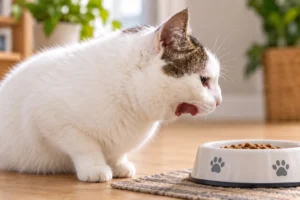
A cat with a sore mouth may still be hungry. The difficulty is not necessarily wanting food, but eating it comfortably.
You might notice your cat dropping pieces of food, chewing mainly on one side, or tilting their head during meals. Some cats become reluctant to eat kibble and show a new preference for softer food. Others approach the bowl eagerly, take a bite, and then walk away.
These changes are easy to mistake for fussiness. Cats already have a reputation for rejecting yesterday’s favourite meal, so dental pain can hide behind what looks like another menu complaint.
Look for a consistent change from your cat’s usual habits. A short video of unusual chewing can help your veterinarian understand what you are seeing at home. If your cat stops eating or seems unable to eat, contact a veterinarian promptly instead of waiting for the problem to pass.
Drooling and Pawing at the Mouth
New or excessive drooling can be another sign of oral discomfort, especially when it occurs with bad breath, difficulty eating, or blood in the saliva.
A cat may also paw at the mouth, rub the face, or pull away when you touch the cheeks. These behaviours do not prove that a tooth is the cause, but they deserve attention.
Some cats develop severe inflammation affecting larger areas of the mouth, a condition called gingivostomatitis. It can make eating and swallowing painful even when the teeth themselves do not look especially dirty. This is one reason the amount of visible tartar does not reliably indicate how comfortable a cat’s mouth feels.
Changes in Grooming and Behaviour
Cats use their mouths for much more than eating. Grooming is a major part of their daily routine, so oral pain can sometimes lead to a coat that looks less tidy or develops more tangles.
You may also notice that your cat becomes less sociable, avoids face handling, or seems unusually irritable. A companion who normally enjoys cheek scratches might suddenly move away from your hand.
These changes can have many causes, including conditions unrelated to the mouth. Rather than labelling them as ageing or moodiness, mention them during a veterinary visit. Your observations help the team assess your cat as a whole.
Why a Professional Dental Examination Matters
Recognising symptoms is useful, but identifying the cause requires veterinary expertise. Different oral conditions can produce similar signs, and treatment must address the actual problem.
For families considering cat teeth cleaning in Calgary, a veterinary examination is the right place to start. Westmount Animal Clinic offers pet dental care and can help you understand the next steps based on your cat’s needs.
A comprehensive dental assessment may involve an examination under general anaesthesia and dental radiographs to evaluate structures beneath the gumline. Anaesthesia allows the veterinary team to examine and clean the mouth thoroughly while keeping the patient still and appropriately monitored.
Removing visible tartar alone does not address hidden disease. Some cats need cleaning and ongoing preventive care, while others require treatment for damaged or painful teeth. Your veterinarian can explain the findings, recommended treatment, and anaesthetic plan.
How to Support Your Cat’s Dental Health at Home
Home care is valuable, but it works best alongside professional guidance. If your cat already has red gums, bleeding, or signs of pain, arrange an examination before attempting to introduce brushing. Scrubbing a sore mouth is unlikely to improve anyone’s day.
Once your veterinarian confirms that home brushing is appropriate, these habits can help:
- Brush regularly: Aim for daily brushing with a soft toothbrush and toothpaste formulated for cats.
- Start gradually: Introduce the toothpaste and brush in short, calm sessions, rewarding cooperation.
- Choose suitable dental products: Ask your veterinary team about appropriate products accepted by the Veterinary Oral Health Council.
- Monitor everyday habits: Notice changes in breath, eating, grooming, and tolerance of face handling.
- Maintain routine veterinary visits: Regular examinations can help identify problems before obvious symptoms develop.
Avoid human toothpaste and do not attempt dental scaling yourself. Home care helps control plaque, but it cannot repair a fractured tooth or treat painful tooth resorption.
Help Your Cat Enjoy a More Comfortable Smile
Your cat does not need to stop eating or show dramatic pain before dental care becomes worthwhile. Persistent bad breath, inflamed gums, unusual chewing, and new drooling are all good reasons to arrange an assessment.
If you are looking for an animal clinic in Calgary, Westmount Animal Clinic can help you take the next step towards understanding and supporting your cat’s oral health.
Noticed something different about your cat’s breath, mouth, or mealtime habits? Contact Westmount Animal Clinic today to book a dental assessment and help your feline companion get back to comfortable meals, happy grooming, and their very important household supervision duties.