Dogs explore the world with their noses, paws, and unfortunately, their mouths. Socks, stones, corn cobs, children’s toys, food wrappers, and mysterious objects found during walks can all look surprisingly appetizing to an enthusiastic canine. A dog may regard a missing sock as a snack; your veterinarian is more likely to regard it as Tuesday’s emergency.
A gastrointestinal blockage occurs when an object, mass, or twisted section of intestine prevents food and fluid from moving normally through the digestive tract. The obstruction may be partial or complete, and either type can become dangerous. Because the symptoms can resemble an upset stomach, recognizing the warning signs – and acting quickly – may save your dog’s life.
What Are the Most Common Signs of a Blockage?
The symptoms depend on where the obstruction is located, whether it is partial or complete, and how long it has been present. Some dogs become seriously ill within hours, while others show vague symptoms that gradually worsen.
Watch for the following warning signs:
- Repeated vomiting, particularly after eating or drinking
- Loss of appetite or sudden refusal of favourite treats
- Abdominal pain, tenderness, swelling, or a tense-looking belly
- Lethargy, weakness, hiding, or unusual restlessness
- Straining to pass stool or producing very little stool
- Diarrhea, sometimes with blood or mucus
- Excessive drooling, lip licking, gagging, or repeated swallowing
- A hunched posture or the “prayer position,” with the front legs lowered and the rear end raised
- Signs of dehydration, including sticky gums, sunken eyes, and reduced skin elasticity
Vomiting is one of the best-known symptoms, but its absence does not rule out an obstruction. A blockage farther along the intestinal tract may initially cause less vomiting. A dog with a partial obstruction may also continue passing small amounts of stool, so seeing a bowel movement does not necessarily mean the digestive tract is clear.
If several symptoms appear together, contacting a veterinary clinic in Calgary is safer than waiting to see whether the problem disappears. Gastrointestinal obstruction can cause dehydration, electrolyte disturbances, intestinal tissue damage, perforation, infection, and shock. In other words, this is not a condition to monitor casually while hoping the sock eventually negotiates its own exit.
How Does a Dog Behave When Something Is Stuck?
Behavioural changes may appear before the physical symptoms become obvious. A normally social dog might withdraw, resist being touched, or repeatedly change position because lying down is uncomfortable. Another dog may pace, whine, pant, or stare at the abdomen.
Some dogs guard their belly or react when it is touched. Others stretch frequently or stand with an arched back. If your dog appears unable to settle, vomits repeatedly, and refuses food, an obstruction should be considered – especially if a toy, sock, bone, or other object has recently disappeared.
Do not press firmly on the abdomen to search for an object. A foreign body may not be detectable from the outside, and pressure could increase pain or aggravate damaged tissue.
What Objects Commonly Cause Intestinal Blockages?
Almost anything that cannot be digested can become trapped. Common offenders include socks, underwear, string, ribbon, stones, rubber balls, pieces of toys, fruit pits, corn cobs, bones, and food packaging. Puppies and dogs that chew compulsively face a particularly high risk.
Linear objects such as string, thread, ribbon, and fishing line are especially dangerous. One end can become anchored while the intestines continue moving, causing the bowel to bunch together and potentially tear. If string is visible in your dog’s mouth or protruding from the rectum, do not pull it. Contact a veterinarian immediately.
Blockages are not always caused by swallowed objects. Tumours, intestinal twisting, severe inflammation, hernias, and intussusception – when one part of the intestine slides inside another – can also obstruct the digestive tract.
Is It a Blockage or Just Constipation?
Constipation usually causes difficulty passing firm, dry stool. A constipated dog may strain but otherwise remain fairly alert, continue drinking, and show interest in food. An intestinal blockage is more likely to cause vomiting, appetite loss, abdominal pain, lethargy, and a rapid decline.
Unfortunately, the two problems cannot always be distinguished at home. Giving laxatives or an enema without veterinary guidance may be harmful if an obstruction is present. Even medications that stimulate intestinal movement should generally be used only after a blockage has been ruled out.
When Is a Suspected Blockage an Emergency?
Seek urgent veterinary attention if your dog repeatedly vomits, cannot keep water down, has a swollen or painful abdomen, becomes weak, develops pale gums, collapses, or may have swallowed a foreign object. Unproductive retching combined with abdominal enlargement can also indicate gastric dilatation-volvulus, commonly called bloat – another life-threatening emergency.
These situations require prompt assessment:
- Your dog swallowed a sharp object, battery, magnet, string, or toxic material
- Vomiting continues or occurs every time your dog drinks
- The abdomen appears swollen, firm, or painful
- Your dog is weak, shaking, disoriented, or unusually sleepy
- There is blood in vomit or stool
- Your dog repeatedly retches without producing vomit
- Symptoms are worsening rather than improving
Time matters because an obstruction may reduce blood flow to the stomach or intestines. Tissue can become damaged or die, increasing the risk of leakage, abdominal infection, shock, and a more complicated recovery. Treatment should not be delayed when an obstruction is suspected.
What Should You Do Before Reaching the Vet?
Remove access to food, toys, garbage, and any remaining pieces of the suspected object. Keep your dog calm and call the clinic while preparing to leave. Tell the veterinary team what may have been swallowed, when it happened, and what symptoms you have observed.
Bring the object’s packaging, a matching toy, or a photograph if available. This information may help determine the object’s size, material, shape, and potential toxicity.
Do not induce vomiting unless a veterinarian specifically instructs you to do so. Sharp objects can cause additional injury on the way back up, and vomiting may be unsafe for a weak or distressed dog. Do not force food, water, oil, bread, pumpkin, or other home remedies. A popular online trick is not a substitute for knowing what is actually happening inside the abdomen.
How Will a Veterinarian Diagnose and Treat a Blockage?
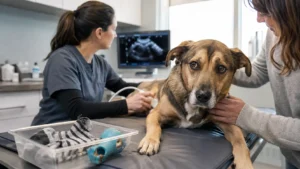
The veterinarian will review your dog’s history and perform a physical examination. Blood tests can reveal dehydration, infection, electrolyte changes, and organ stress. X-rays may identify certain foreign objects or unusual patterns of gas and fluid. Ultrasound can provide a closer view of the intestines and may detect materials that do not appear clearly on an X-ray.
Treatment depends on the object’s location, the severity of the obstruction, and the condition of the intestinal tissue. Some objects in the stomach can be removed with an endoscope. Other cases require surgery. Intravenous fluids, pain relief, anti-nausea medication, and careful monitoring may also be needed.
Earlier treatment often means fewer complications and a better chance of a smooth recovery. It can also turn a frightening situation into a much more manageable one – for the dog and for the human wondering why anyone would eat half a tennis ball.
Help Your Dog Without Guesswork
A blockage cannot be reliably confirmed or ruled out at home. If your dog is vomiting, refusing food, showing abdominal pain, acting unusually tired, or may have swallowed something, prompt professional assessment is the safest choice. Severe or rapidly worsening symptoms may require immediate care at a Calgary emergency vet hospital.
Contact Westmount Animal Clinic today to describe your dog’s symptoms and arrange an urgent or same-day appointment. The veterinary team can examine your pet, recommend appropriate diagnostic testing, and begin treatment before a suspicious snack becomes a serious emergency.